Why Most Brands Miss the Most Important Moment in the Customer Journey
Most brands focus on abandoned cart emails after the customer leaves.
And yes, those flows matter.
But very few brands actually look at what happens right before that moment.
That small window — when the customer is still on the site, still thinking, still deciding — is often where the biggest opportunity is.
The Problem With “Fixing It Later”
Abandoned cart emails are, by definition, reactive.
The customer has already left.
Something didn’t feel right, or wasn’t clear enough, or simply wasn’t compelling enough to complete the purchase.
So the strategy becomes:
Send a reminder
Offer a discount
Try to bring them back
And while that can work, it’s often treating the symptom, not the cause.
What Happens Before Abandonment Matters More
Before a customer leaves, there is usually a moment of hesitation.
- “Is this worth it?”
- “Should I add something else?”
- “Is there any benefit if I spend a bit more?”
Most brands do nothing at that point.
This is exactly where cart-based popups can make a difference.
From Signup Tool to Conversion Tool
Popups are usually seen as list growth tools.
“Sign up and get 10% off.”
That works, but it’s limited.
Cart-based popups are different.
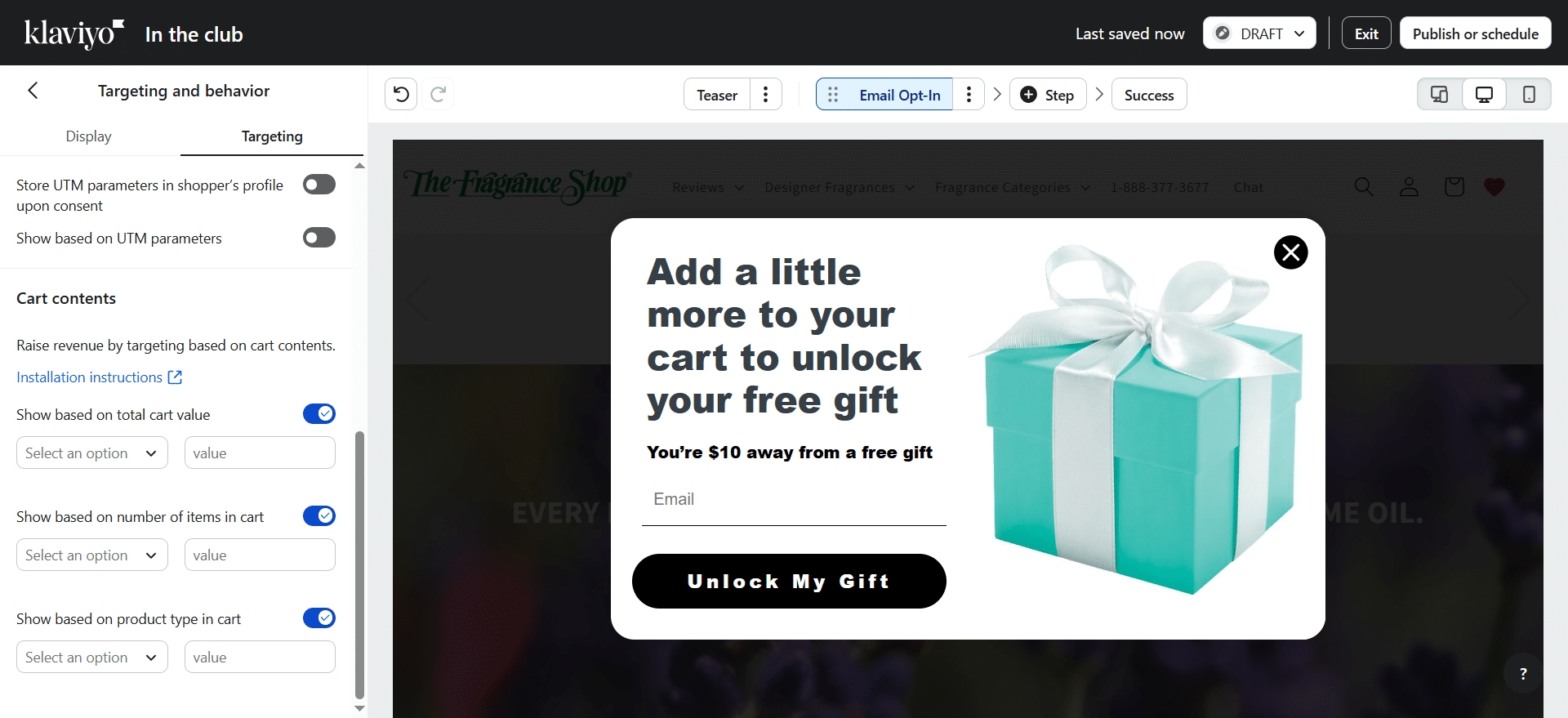
They are triggered based on behavior — what the customer already has in their cart, or how close they are to a specific threshold.
Used properly, they shift the role of the popup:
From collecting emails
→ to actively supporting the purchase decision
Why Specific Messaging Changes Everything
There is a big difference between generic and specific messaging.
For example:
“Add a little more to your cart”
versus
“You’re $10 away from a free gift”
The second version works better for a simple reason.
It removes friction.
It gives the customer:
- a clear goal
- a clear reward
- and a clear next step
There is no guessing involved.
Timing Is Everything
This only works if the popup appears at the right time.
Too early, and it feels irrelevant.
Too late, and it becomes an interruption.
One of the most common mistakes is showing popups during checkout.
At that point, the customer has already made the decision.
Adding friction there can actually reduce conversions.
The ideal moment is earlier:
- on product pages
- in the cart
- while the customer is still evaluating
When It Works — And When It Doesn’t
Cart-based popups can be very effective, but only if a few conditions are met:
- The offer is meaningful (free gift, threshold reward, clear benefit)
- The message is simple and specific
- The timing feels natural, not forced
- The experience does not interrupt the buying flow
When those elements are in place, even a small change can:
- increase average order value
- improve conversion rate
- reduce abandonment before it happens
When they are not, the popup becomes just another distraction.
A Small Change With a Bigger Impact Than Expected
A lot of effort goes into optimizing emails after the customer leaves.
But sometimes, the more valuable improvement is made earlier — in the moment before they decide to leave at all.
That is where behavior-based triggers, like cart-based popups, can have a much bigger impact than expected.
Final Thought
The goal is not to add more popups.
The goal is to make the right message appear at the right moment.
When that happens, a popup stops being just a form.
It becomes part of the conversion strategy.